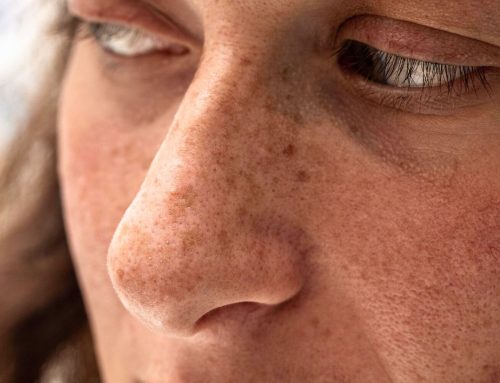



Melasma is one of the most challenging pigmentation disorders we treat in dermatology — not because options are scarce, but because the wrong approach can make it significantly worse. At our London clinic, we regularly see patients who have already tried various treatments: prescription creams, chemical peels, even laser sessions elsewhere. Some saw little improvement. Others noticed their pigmentation returning, or darkening, shortly after treatment.
The question we hear most often is: is there a laser that actually works for melasma? There is — but answering it properly requires understanding why this condition behaves so differently from other pigmentation issues.
Why melasma is more than a pigmentation problem
For years, melasma was treated as an excess of melanin that simply needed to be removed. Modern dermatology tells a more complex story. Hormonal fluctuations, vascular changes, genetic predisposition and, critically, chronic low-grade inflammation all play a role in how melasma develops and persists. This inflammatory component is what makes treatment selection so important.
When the skin becomes inflamed, whether from UV exposure, heat, or an overly aggressive procedure, it often responds by producing more pigment. This is known as post-inflammatory hyperpigmentation, and it explains why treatments that work well for other conditions can actively worsen melasma if not applied with considerable care.
Picosecond laser for melasma: targeted energy, minimal thermal damage
Among the technologies currently available, the picosecond laser stands out for one defining characteristic: the speed at which it delivers energy. Its pulses are so brief that they act mechanically on pigment particles, shattering them with considerably less heat generation than conventional laser systems. Less heat means less inflammation — and less inflammation means a significantly lower risk of triggering new pigmentation in the treated area.
In clinical practice, this translates into a more controlled and selective approach to pigment — one that offers a better safety margin in patients who are prone to hyperpigmentation. Many patients also report an improvement in overall skin radiance and texture, which is particularly valuable when melasma coexists with signs of photoageing.
Why CO₂ laser is not typically used for melasma
CO₂ laser is a highly effective technology for skin resurfacing, deep wrinkles and scar remodelling — but its mechanism of action makes it poorly suited as a primary treatment for melasma. The significant inflammatory response it generates, which is therapeutic in other contexts, can be counterproductive in melasma-prone skin: rather than clearing pigmentation, it may stimulate additional melanin production and deepen or extend existing patches.
Does IPL have a role in melasma treatment?
Intense Pulsed Light can offer benefits in carefully selected patients — improving skin tone, reducing redness and addressing certain superficial pigmentation issues. However, when the primary goal is treating established melasma, IPL requires a very conservative approach. At higher energy settings, or in skin with a tendency to hyperpigment, the risk of post-inflammatory darkening is real and well-documented. We therefore consider it a complementary tool rather than a first-line option for active melasma.
An important caveat: picosecond laser is not a permanent cure
Melasma is a chronic condition. No treatment — however advanced — can guarantee its permanent resolution. Sun exposure, hormonal changes, heat and genetic factors can all cause pigmentation to return, even after an excellent initial response.
What picosecond laser does offer is a more precise and less inflammatory way to address the pigment — with a better-controlled risk profile than many alternatives. But it works best as part of a broader strategy: strict daily sun protection, management of known triggers and a personalised long-term maintenance plan.
Struggling with melasma in London? Let’s find the right approach for your skin
At Clínica Dermatológica De Felipe in London, we carry out a thorough individual assessment before recommending any treatment for melasma. The right technology depends on your skin type, the depth and pattern of your pigmentation, and your history of previous treatments. In melasma more than anywhere else, the correct diagnosis is the foundation of effective care.