



At the De Felipe Dermatology Clinic in London, we are experts in non-surgical rhinoplasty using hyaluronic acid, a technique that can correct nasal irregularities, refine the profile and bring the nose into better harmony with the rest of the face, with no need to set foot in an operating theatre.
Our specialist facial aesthetics team assesses each patient’s nasal anatomy before recommending any treatment. The result: a more balanced nose, with a natural look and no obvious signs of having had anything done.
What is non-surgical rhinoplasty?
Non-surgical rhinoplasty, also known as a liquid nose job or filler rhinoplasty, is an aesthetic treatment involving carefully placed hyaluronic acid injections at specific points on the nose to improve its shape and proportions. Through precise micro-injections, it’s possible to camouflage a bump, lift a drooping tip, correct asymmetry or improve the nasal profile, with no scalpel and no general anaesthetic.
The hyaluronic acid used is biocompatible, biodegradable and fully reversible with hyaluronidase, which makes it the safest, most predictable option for non-surgical nasal reshaping.
What non-surgical rhinoplasty can correct
This treatment is best suited to correcting issues of shape and proportion, not function. The most common cases we treat include:
What non-surgical rhinoplasty can’t do (and when you need surgery)
This treatment has clear limits. Being upfront about what it can’t achieve matters just as much as explaining what it can:
Safety: vascular risk, reversibility, and why the doctor matters
The nose is one of the highest-risk areas in aesthetic medicine when it comes to blood supply. Its network of vessels, with the dorsal nasal artery as a key structure, means the wrong technique can lead to serious complications: vascular occlusion, with a risk of skin necrosis or, in extreme cases, vision loss from arterial embolisation. This isn’t a theoretical risk, nor something we’d rather play down: it’s exactly why this treatment should always be carried out by a doctor with a thorough understanding of vascular anatomy and the nasal SMAS layer.
The biggest safety advantage of hyaluronic acid is that it’s reversible: if a vascular complication is caught early, it can be dissolved in a controlled way with hyaluronidase. That reversibility, combined with a conservative technique and Dr. De Felipe’s medical experience, is what turns a higher-risk procedure into a safe, predictable treatment.
What non-surgical rhinoplasty involves in London
A 20 to 30 minute appointment, in-clinic, with no general anaesthetic.
How long do the results last?
Results from non-surgical rhinoplasty generally last between 9 and 18 months, depending on the product used, the amount injected, the area treated and each patient’s individual metabolism. Areas with more movement and pressure tend to break the product down a little sooner.
To keep results going long-term, we recommend booking maintenance sessions before the effect has fully dissolved, which usually means less product is needed at each top-up, and sessions can often be spaced further apart over time.
Who is this treatment suitable for?
Non-surgical rhinoplasty suits most adult patients who want to improve the shape of their nose without surgery. During your consultation, we pay particular attention to:
Aftercare following non-surgical rhinoplasty
Following these guidelines in the first few days helps achieve a good result and lowers the risk of unwanted effects.
What the research shows
What the research shows
Nonsurgical Rhinoplasty: An Updated Systematic Review of Technique, Outcomes, Complications, and Its Treatments. Aesthetic Plastic Surgery. 2024. DOI: 10.1007/s00266-024-04161-4. PMID: 38862661.
Song D, Wang X, Yu Z.
Nonsurgical rhinoplasty using the hyaluronic acid filler VYC-25L: Safety and patient satisfaction in a retrospective analysis of 492 patients. Journal of Cosmetic Dermatology. 2024;23(1):55-62. DOI: 10.1111/jocd.15997. PMID: 37740484.
Jalali F, Sadeghi E, Hosseini H.
How is non-surgical rhinoplasty different from surgery?
These are two very different procedures, with different indications, timeframes and outcomes.
Why choose De Felipe Dermatology Clinic
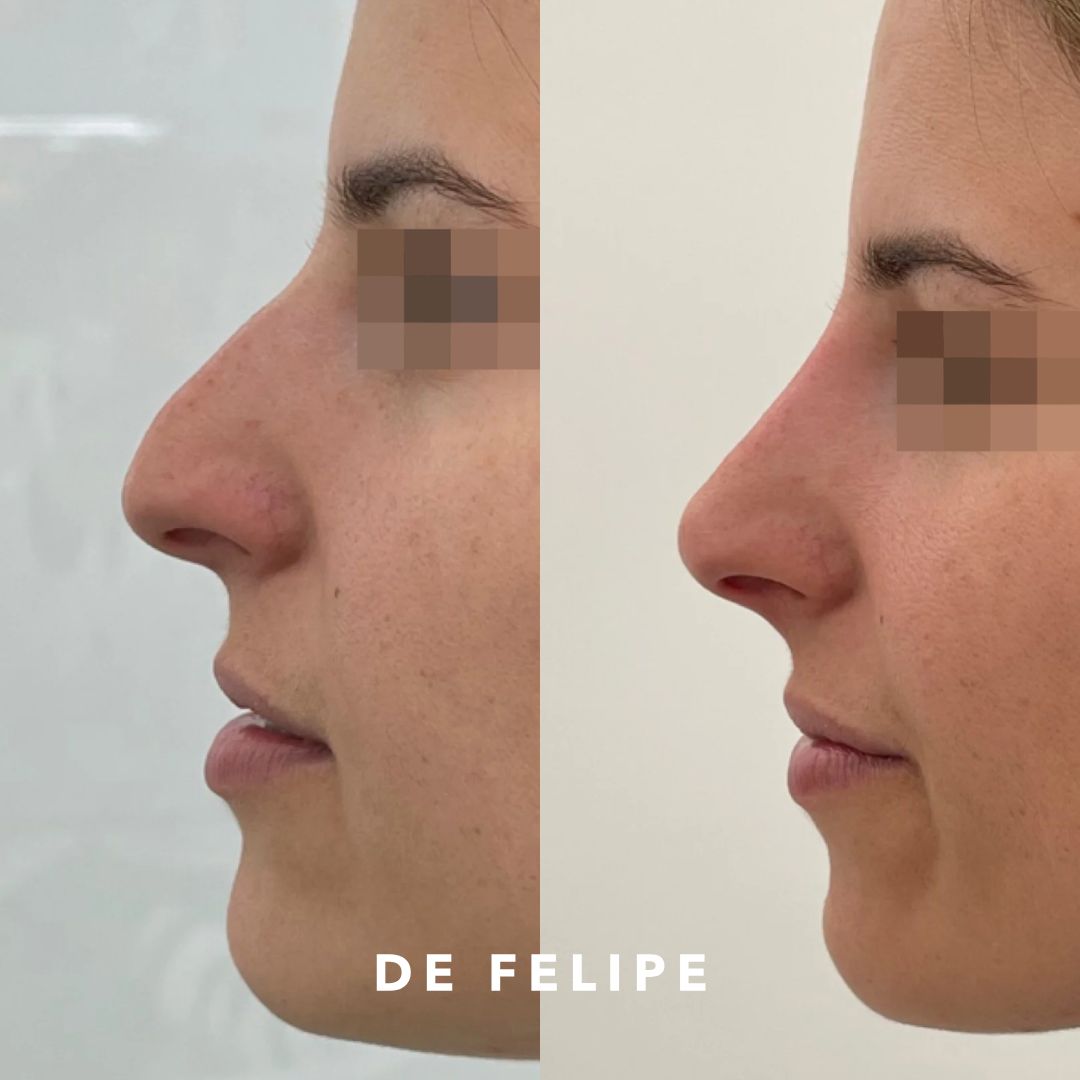
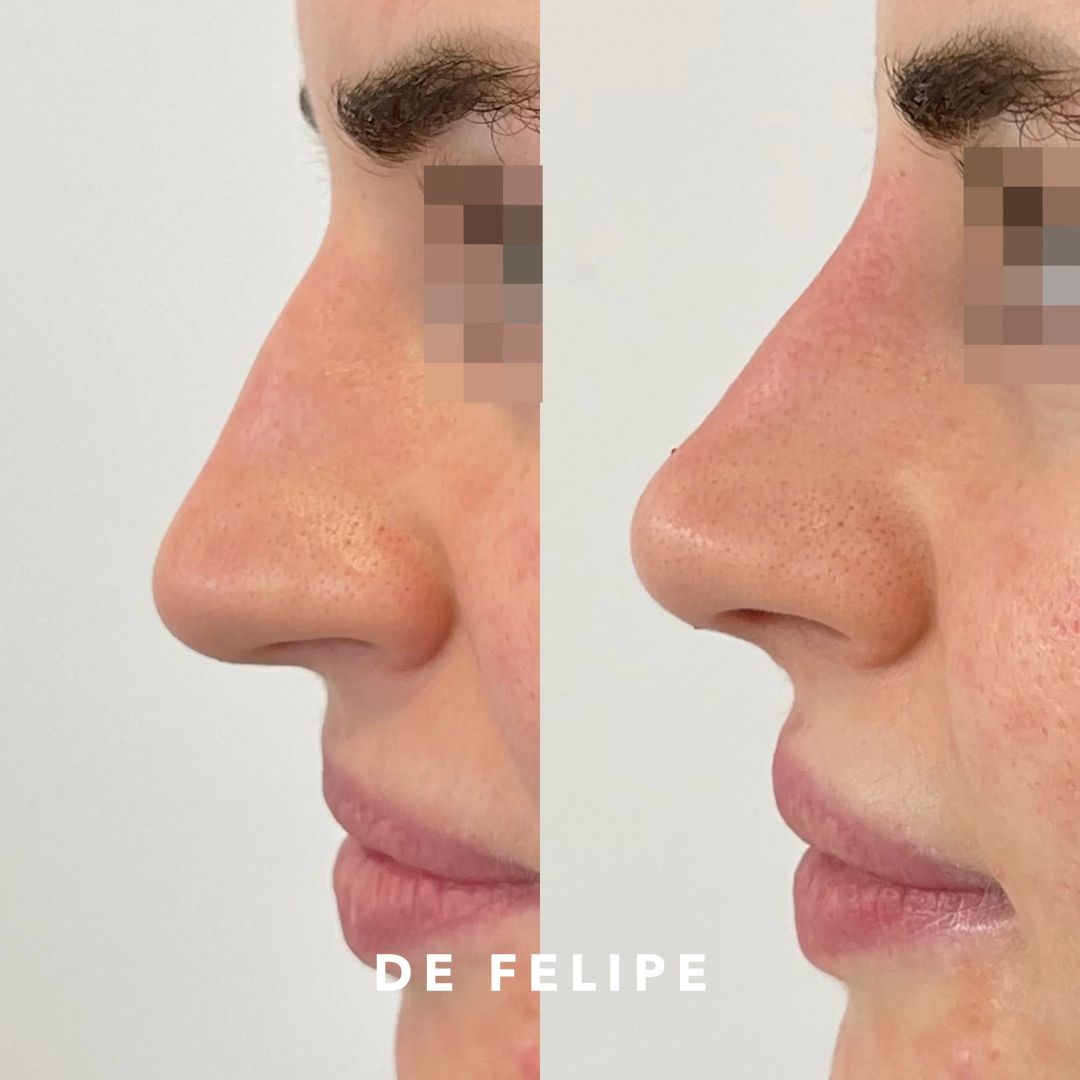
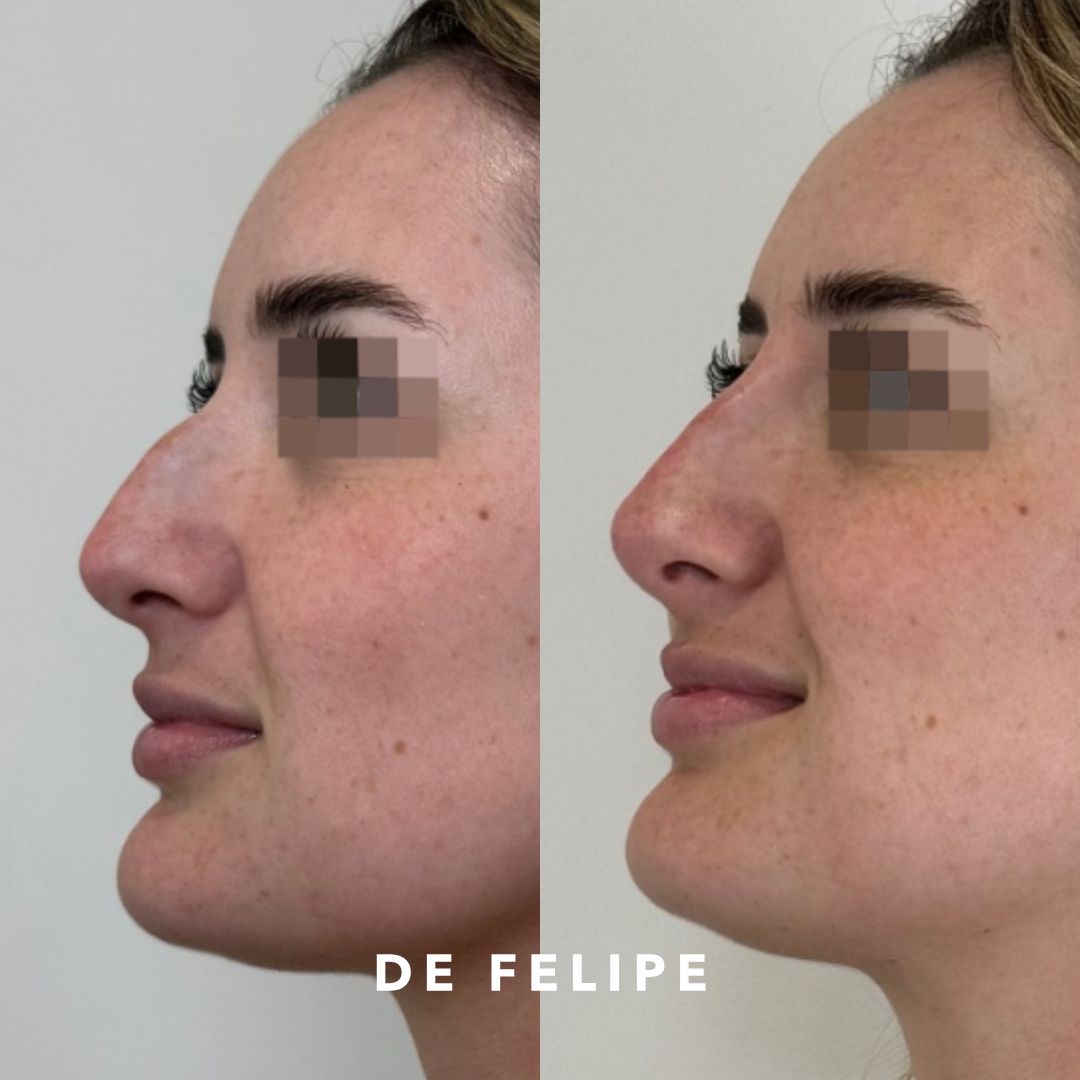
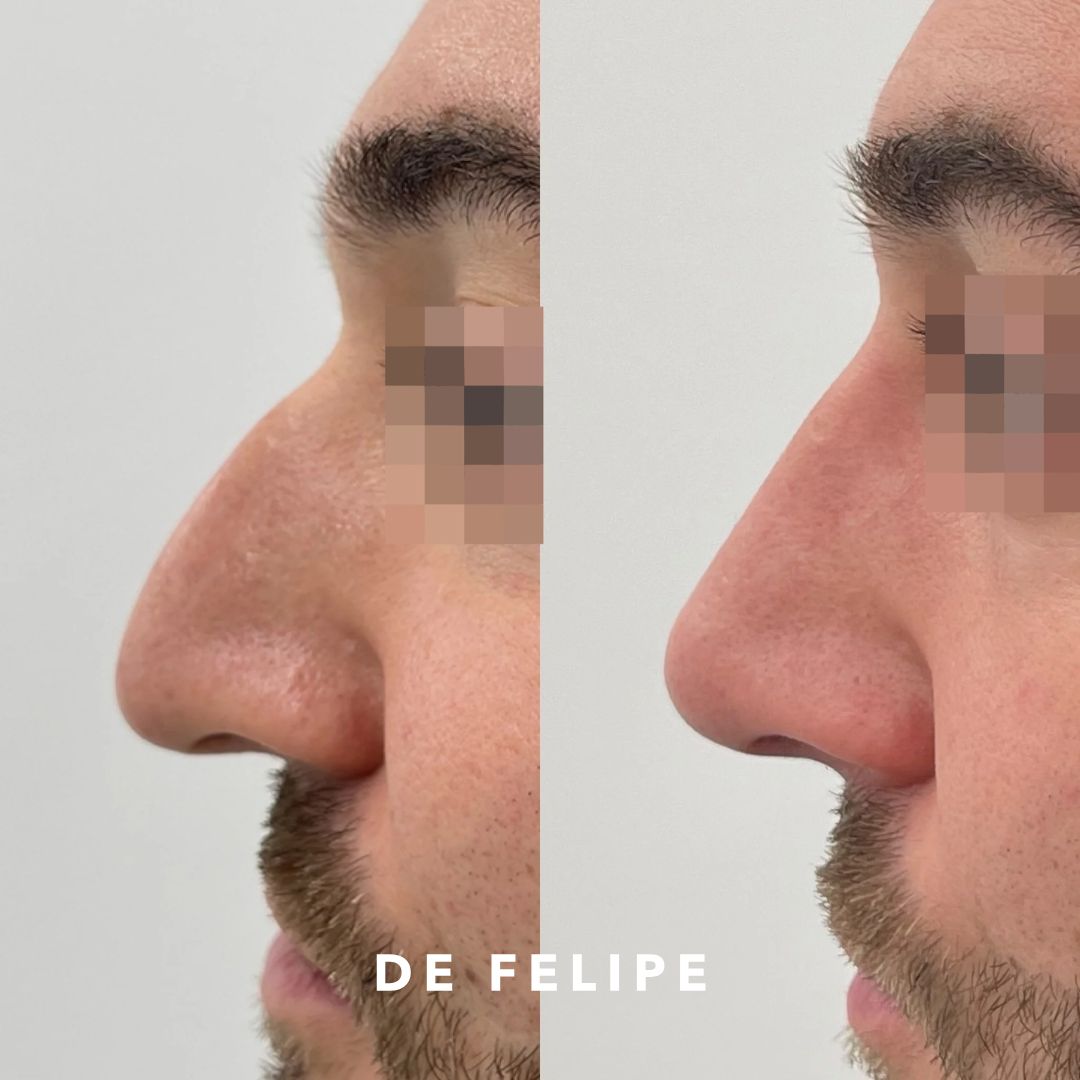
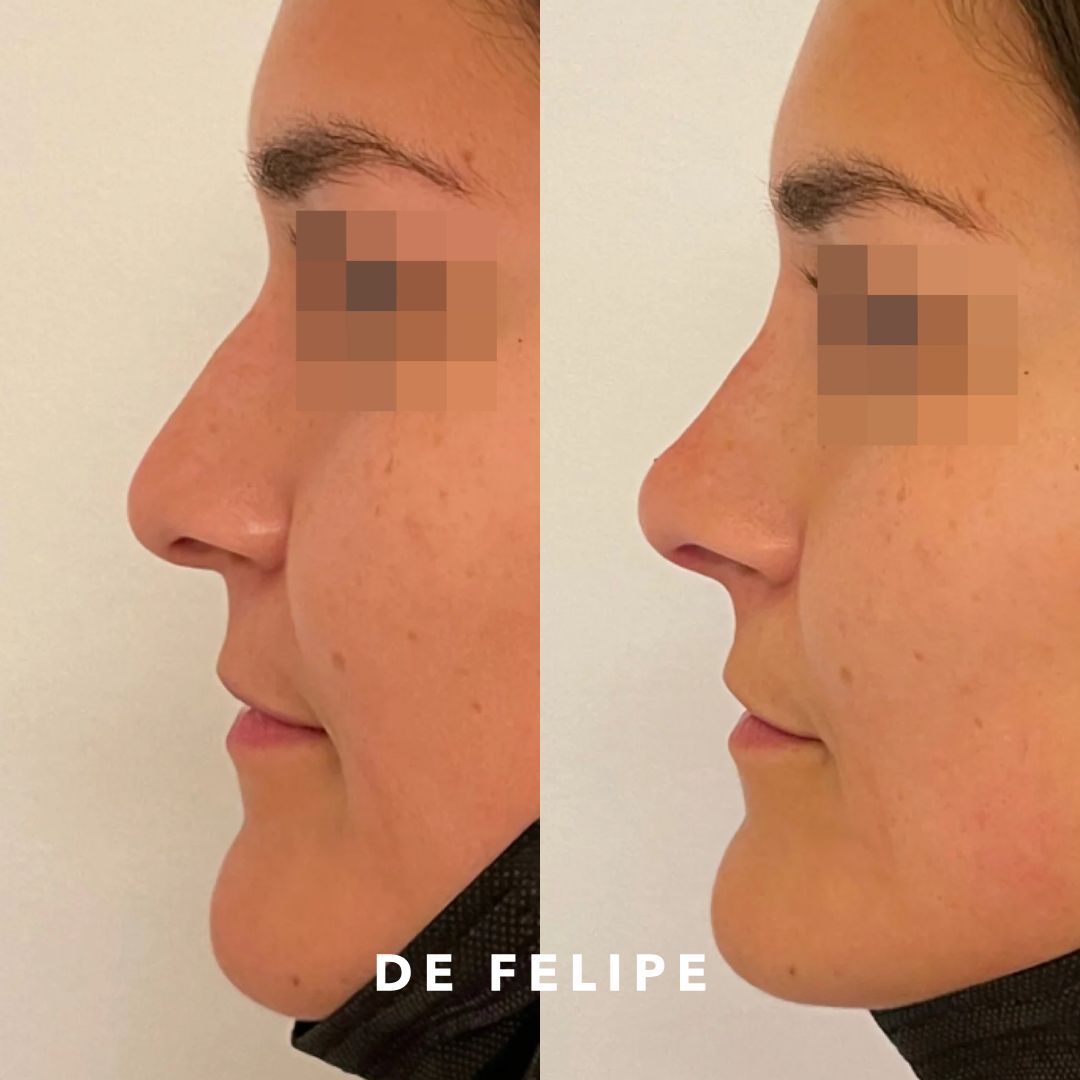
Non-surgical rhinoplasty before and after
Results from patients with real stories, where a tailored approach has been the key to achieving the best outcomes.
Non-surgical rhinoplasty fees in London
The cost depends on the amount of hyaluronic acid required, which varies according to the complexity of the correction and the areas being treated.