


Pregnancy triggers a cascade of hormonal changes that, paradoxically, tend to benefit the hair during gestation. However, when an underlying alopecia is present, many women wonder whether they can continue with their usual treatments. The answer depends greatly on the drug or technique in question.
Which treatments are absolutely contraindicated?
There are four drugs that carry the strictest contraindication: finasteride, dutasteride, bicalutamide, and spironolactone. All of them act, in one way or another, by blocking the action of androgens on the hair follicle. It is precisely for this reason that they pose a risk during pregnancy, as androgens play a fundamental role in the normal development of the genitalia of the male foetus during weeks 8–12 of pregnancy.
Finasteride and dutasteride are inhibitors of the enzyme 5-alpha reductase and are classified as Category X by the FDA, indicating that the risks clearly outweigh the benefits. The contraindication is absolute in both oral and topical form.
The key difference between the two compounds with regard to pregnancy is their half-life. Finasteride is eliminated from the body within 1 to 2 days. However, given its high teratogenic potential, the clinical consensus recommends discontinuing it at least 3 months before attempting to conceive. Dutasteride, on the other hand, with a half-life of approximately 5 weeks, remains detectable in the blood for up to 6 months after the last dose. Its recommended discontinuation period is therefore at least 6 months, and many specialists advise a margin of even 12 months.
Bicalutamide is a non-steroidal anti-androgen used off-label in the treatment of female alopecia. Like the aforementioned drugs, it is also classified as Category X by the FDA. Its summary of product characteristics explicitly establishes the need for effective contraception throughout the entire treatment and for 130 days following the last dose, which is equivalent to approximately 4–5 months of wash-out period.
Finally, spironolactone deserves particular attention, as it is one of the most commonly prescribed anti-androgens for androgenetic alopecia in women with hyperandrogenism or polycystic ovary syndrome. Its mechanism of action is twofold: on the one hand, it blocks androgen receptors (which carries a risk of feminisation of the male foetus). On the other hand, it acts on aldosterone receptors, potentially altering foetal electrolyte balance. Although data in humans are scarce, the theoretical risk based on animal studies justifies this contraindication. From a pharmacological standpoint, spironolactone is eliminated rapidly (within a matter of hours). Nevertheless, the medical consensus recommends discontinuing it between 1 and 2 months before conception to ensure complete hormonal normalisation.
Can I take minoxidil if I am pregnant?
Minoxidil is probably one of the most widely used treatments for female alopecia. However, its use is discouraged during pregnancy by the leading clinical guidelines.
The FDA classifies topical minoxidil as Category C, meaning that studies have shown risk to the foetus without sufficient data being available in pregnant women. Whilst it is true that the systemic absorption of topical minoxidil is very low, several published cases advise against its use during gestation.
In the case of oral minoxidil, the higher level of systemic absorption amplifies this risk. The general recommendation is therefore to discontinue it before attempting to become pregnant. This drug is eliminated rapidly, with a half-life of approximately 4 hours, and the standard recommendation is to stop it at least 2–4 weeks before beginning to try to conceive.
Can corticosteroid injections be administered if I have alopecia areata?
Triamcinolone injections (a synthetic corticosteroid) into the scalp are a common resource in the treatment of alopecia areata. However, their use during pregnancy is more nuanced. This drug is capable of crossing the placental barrier and, in some animal studies, adverse effects on the foetus have been documented at high doses, although the clinical relevance at low doses remains unknown.
Current guidelines suggest that, in selected cases of alopecia areata, its use might be considered when the benefit outweighs the risk, though always under strict medical supervision and at the minimum effective dose. No established wash-out period exists in the medical literature for this drug, and therefore the most appropriate course of action is always to consult a specialist who can assess each case on an individual basis.
What about topical oestradiol and progesterone?
Some compounded formulations include oestrogens or progesterone applied directly to the scalp. Although systemic absorption is theoretically very low, no specific safety studies exist in pregnant women. In the absence of data, the precautionary principle generally indicates that their use should be avoided during pregnancy. With regard to the wash-out period for these compounds, discontinuation at the time of pregnancy planning is considered sufficient, given their rapid local metabolism.
Platelet-rich plasma: is it a safe option?
Platelet-rich plasma (PRP) is obtained from the patient’s own blood, introduces no external drugs, and its growth factors act predominantly at a local level. Indeed, PRP is actively used in in vitro fertilisation with a favourable safety profile.
Some studies recommend its exclusion during pregnancy not because of any demonstrated biological risk, but due to the procedure itself. During this technique, blood must be drawn from the patient, centrifuged, and injected into the scalp. If these steps are not carried out under adequate hygienic conditions, there is a risk of infection which, although low, could have consequences during pregnancy. For this reason, should treatment be required, it is essential that it be performed at a specialist centre with all appropriate hygiene and safety guarantees.
What about low-level laser therapy (LLLT)?
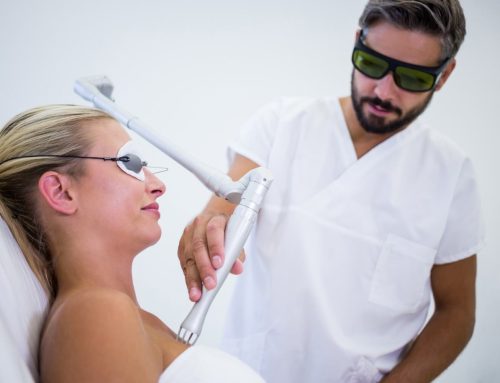
Low-level laser therapy (known as LLLT) is the treatment modality with the greatest safety margin. It involves no drugs, and when applied to the scalp, the light energy reaches neither the uterus nor the foetus.
Evidence of foetal harm is non-existent. For medicolegal reasons, many manufacturers may include it as a relative contraindication. However, when applied under medical supervision, it is considered a safe and effective alternative for those who cannot forgo treatment.
Which treatments can be carried out during pregnancy?
Although the therapeutic arsenal is clearly reduced for reasons of foetal safety, there is no need to abandon all treatment entirely. There are measures with scientific backing and a favourable safety profile that can make a real difference:
- Correcting nutritional deficiencies: hair loss during pregnancy is frequently related to deficiencies in iron, vitamin D, zinc, or biotin. A thorough clinical history and a blood test could identify any deficiency, and, in such cases, targeted supplementation would be both safe and effective.
- Hair care: it is essential to avoid hairstyles that pull on the hair, reduce exposure to heat sources, and use shampoos free from harsh sulphates, all of which help to preserve hair density during this period of increased fragility.
- Low-level laser therapy (LLLT): as described above, this is the active option with the greatest safety margin when applied to the scalp. To maximise its effectiveness, it is important to attend a centre specialising in this device, where the most effective parameters are applied.
- Ongoing dermatological support: pregnancy is not a reason to abandon the monitoring of alopecia. A specialist can monitor progression, anticipate post-partum telogen effluvium (very common in the 2–4 months following delivery), and design a plan for the reintroduction of treatment.
-
Platelet-Rich Plasma (PRP), always performed under strict medical and safety protocols. It has become the preferred regenerative treatment during pregnancy.
For all of these reasons, if you are planning a pregnancy or are already in the gestational or breastfeeding period, it is essential that you do not discontinue or modify any treatment on your own initiative. An expert trichologist can help you design a personalised plan that seeks to maximise results whilst prioritising the safety of the foetus.