


Hydrolysed collagen: the anti-ageing supplement with the strongest clinical evidence
Collagen is one of the main proteins that provides structure, firmness, and hydration to the skin. From around the age of 25–30, its production begins to decline progressively. By the age of 50, this protein has already been reduced to approximately half its original levels. This loss translates into more wrinkles, laxity, and drier skin.
For this reason, oral supplementation with hydrolysed collagen peptides (low molecular weight fragments that the intestine is able to absorb with ease) is currently the anti-ageing supplement with the greatest support in the scientific literature. A 2025 meta-analysis analysed ten randomised clinical trials involving 646 participants and confirmed statistically significant improvements in parameters such as skin hydration and elasticity at doses of between 1 and 10 g/day. Individual studies additionally report measurable reductions in wrinkle depth and volume, observed from 8–12 weeks of treatment onwards. Marine collagen (derived from fish) appears to stand out from the rest in terms of its high bioavailability and favourable safety profile.
Oral photoprotection: carotenoids, astaxanthin, and Polypodium leucotomos
One of the topics on which the most dermatological evidence exists is that cumulative solar radiation is the primary cause of premature skin ageing. It is therefore essential to emphasise the use of topical photoprotection throughout the year. However, three compounds have also demonstrated the ability to reinforce the skin’s defences against this damage when taken orally.
Carotenoids (beta-carotene, lutein, and astaxanthin) are compounds that act as antioxidants, neutralising the free radicals generated by ultraviolet light. A 2025 systematic review analysing 176 studies confirmed their photoprotective, anti-inflammatory, and collagen synthesis-stimulating properties. Astaxanthin deserves particular mention, as it exhibits antioxidant potency far superior to that of vitamins C and E.
Polypodium leucotomos extract (a tropical fern with decades of research behind it) is the oral photoprotective supplement with the most extensive clinical track record. A review published in 2025 by Spanish dermatologists confirmed that it is an agent capable of reducing actinic damage and raising the threshold at which the skin begins to burn. It is worth emphasising, however, that these supplements should serve as a complement to topical photoprotection, never as a substitute for it.
Nicotinamide (vitamin B3): cellular energy against ageing
Nicotinamide (also known as niacinamide) is the active form of vitamin B3. Its mechanism of action in ageing is based on the restoration of NAD+, a molecule that is fundamental to cellular energy metabolism. As NAD+ levels decline with age, the capacity for cellular repair deteriorates and the inflammatory response intensifies.
A study published in the Journal of the American Academy of Dermatology (JAAD) in 2025, conducted by 62 dermatologists across 43 centres, places it amongst the ingredients with the strongest scientific support against wrinkles, redness, and pigmentation. This compound appears to act effectively both topically and orally, reinforcing the skin barrier and modulating pigmentation.
Probiotics and hair micronutrients: two growing areas
The gut-skin axis is one of the most active fields in current dermatological research. Probiotics (beneficial bacteria that modulate the intestinal flora) have shown, in several recent meta-analyses, a modest reduction in inflammatory lesions in acne, and solid evidence links them to an improvement in rosacea and psoriasis flare-ups. Whilst further studies are needed to establish a more robust association, the current evidence is promising.
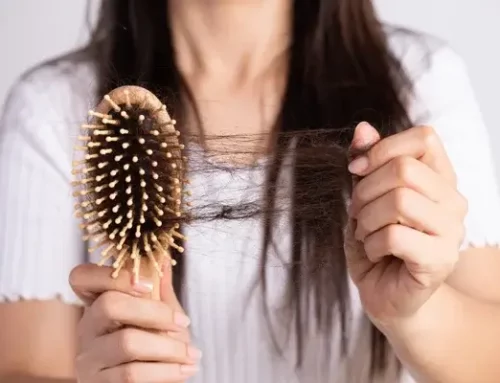
As might be expected, one of the aspects that most visibly ages a person is hair loss and reduced hair quality. With regard to supplements in this area, a recent systematic review on androgenetic alopecia and micronutrients identifies vitamin D, iron, zinc, selenium, and B-group vitamins as the most relevant for the hair growth cycle. Furthermore, supplements such as saw palmetto have been shown to reduce levels of DHT, the principal hormone involved in androgenetic alopecia. However, the key nuance here is that the benefit of supplements is significantly greater when a deficiency exists. In such cases, it is therefore essential to consult a professional who can individually assess whether a specific deficiency is present.
Beyond supplements: habits with evidence
The supplements mentioned above work best on a solid foundation of healthy habits. Daily photoprotection remains the single most effective and cost-efficient measure for slowing extrinsic skin ageing. The Mediterranean diet (rich in antioxidants, polyphenols, and healthy fats) has been associated with reduced skin deterioration and a lower risk of alopecia. Managing oxidative stress through regular exercise, restorative sleep, and smoking cessation completes a comprehensive approach that no supplement alone can replace.
If you need to know which supplements are most appropriate for your specific case, it is advisable to visit a specialist centre where a personalised assessment of the skin and hair can be carried out, in order to guide you towards the supplements with the greatest evidence for your situation.