


Summer takes a toll on the skin — often in ways that only become visible weeks later. Every September at our London clinic, patients come in noticing things they hadn’t paid much attention to during the holidays: new spots that weren’t there before, a duller complexion, enlarged pores, or a skin texture that simply doesn’t feel as smooth or even as it used to.
This happens even in those who wore sunscreen consistently. Because sun damage isn’t just about burns: weeks of cumulative UV exposure, combined with heat, chlorine, salt water and disrupted skincare routines, can gradually shift the skin’s balance in ways that aren’t always obvious until autumn arrives.
What summer actually does to your skin
Cumulative UV exposure is one of the leading drivers of premature skin ageing. We’re not talking about isolated sunburns: repeated and prolonged exposure to ultraviolet radiation can progressively trigger changes in pigmentation, a reduction in skin elasticity and alterations in texture that build up quietly over time.
Dehydration compounds the picture. The combination of heat, perspiration, air conditioning and regular contact with sea or pool water often leaves the skin feeling tighter, rougher and less radiant by the end of summer. Even skin that appeared to weather the season well can reveal its consequences a few weeks down the line.
The most common signs: pigmentation, dryness and a dull complexion
Pigmentation changes are among the most frequent concerns we see in September and October. Some patches were already present and simply become more noticeable after sun exposure; others appear as a direct result of accumulated photodamage. Uneven texture, enlarged pores and a general loss of radiance and uniformity are also very common.
These changes don’t all have the same origin, and they don’t all respond to the same treatment. That’s why an individual assessment before starting any procedure is essential — to understand what’s actually happening beneath the surface.
Why autumn is the ideal time to treat sun damage
As UV intensity decreases in the autumn months, a valuable therapeutic window opens up. Many of the most effective treatments for photodamage — chemical peels, lasers, depigmenting protocols — require reduced sun exposure afterwards to be both safe and effective. September and October are therefore the prime time to act.
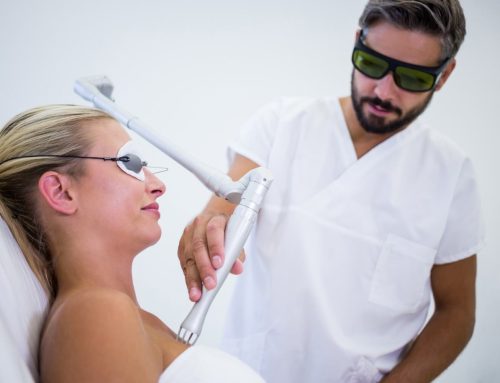
Where to begin depends on each patient’s skin. Some need to restore hydration and rebuild the skin barrier before anything more intensive is considered. Others can move straight to targeted treatments for pigmentation, texture or radiance. For a more comprehensive improvement in overall skin quality, biostimulation and deep hydration treatments are particularly effective. For more specific photodamage — spots, redness, textural irregularities — laser and light-based technologies allow a precise and well-controlled approach.
The right treatment depends on your skin, not on what’s trending
It can be tempting in autumn to jump straight into whichever peel or laser is generating the most buzz. But what works well for one person isn’t necessarily the right choice for another. Skin phototype, tendency to hyperpigment, the presence of redness or sensitivity, age and the extent of sun damage all influence which treatment is appropriate — and at what intensity and sequence.
A prior medical assessment allows us to set the right priorities and avoid treatments that, in certain skin types, could do more harm than good.
Autumn is also an opportunity to prevent future damage
Recovering skin after summer isn’t only about correcting what we can see today. Sun damage is cumulative, and what goes untreated now may emerge as deeper pigmentation or reduced skin quality over the coming years. September is a good moment to review your skin, re-establish your care routine and set a plan for the months ahead.
And even though summer is over, one step has no off-season: daily sun protection. Limiting cumulative UV exposure remains the single most effective strategy for preventing pigmentation and premature skin ageing — all year round.
Want to assess your skin after summer in London?
At Clínica Dermatológica De Felipe in London, we carry out personalised skin assessments to understand exactly what the summer has left behind — and which treatment approach is best suited to your skin’s specific needs. Acting at the right time, and doing so on an individual basis, is what makes the real difference.